
Reality is constructed, perceived, analyzed, and yet mysterious. We swim in it and yet do not see it. If we travel, we start to create cracks in its’ foundation. Seeing how other cultures do things vastly different from us can make us question our long held invisible belief that ‘everyone does life the way we do it, the right way’. That our version of normal is simply normal.

We don’t know, as Hume said, that “causes and effects are discoverable not by reason, but by experience” (Hume, 1748/2007). We reason from inside our own lives, validating what we already see. It is only when we experience something genuinely different that the body overrides the mind and shows us how constructed our reality actually was. Experience is the greatest teacher. It is also the only one that truly reconstructs how we see the world.
So when it comes to things like oppression, if you have not experienced it then you do not understand it.
Experience is Everything
Imagine seeing a bird standing a foot away from water to cool itself, yet not flying toward it. The bird might seem sickly or confused to us but upon stepping back we see a bar in front of it. We then think the bird is capable of getting over that bar, so it must be mad. We step back again and see two more bars. We step back again and see several more bars.
Each bar alone is not enough to cage the bird, but all of those bars together are able to do so. Many of us would not see the network of bars that encased it because in our reality there are no bars, we never had to deal with them.
Those in power have a duty to do this stepping back. Otherwise they are not representing the people’s experiences but their own which is usually more privileged. “It’s easy, just jump over that bar you silly bird, what’s the problem? We need to have laws to help this lazy bird?”
As Marilyn Frye inspired us in her bird cage example, “each individual bind women face can be thought of as a single bar in a cage: by itself, it isn’t enough to contain the bird. But, with enough bars, the bird is trapped inside the cage, left with nowhere to go. This is the complete absence of choice Frye describes: how it is the culmination of issues women face that is so “immobilizing” and why, for Frye, their struggle—and not men’s—is considered oppression.” (Frye, 1983, pp. 4–5)

What is Oppression?
In feminist theory “oppression is based on intersecting identities that can create discrimination and exclusion. The theory indicates the idea that, through knowledge and action, oppressive systems can be disrupted to support change and understanding.” (Washington State University, n.d.) It is those intersecting identities that can really trip us up.
Are you a woman? Are you black? Are you disabled? Are you lower middle class? Are you all of these things together? Each one of these identities, and more, are given several bars when they are seen in western societies. We can know this intellectually but experientially, it is quite different. Many take the time to define oppression so that people do not confuse it with frustration or standard limitation caused by social structures.
In my own life as a white woman I did not face much oppression until later in life when I met a powerful person who applied their need for control, upon me. Suddenly things I had worked so hard for were taken away from me. I was told not to pursue certain dreams because it was decided that I would follow another path in my life and career. My freedom to follow my dreams and have hope for the future was gone.
This fosters hopelessness. When nothing one does matters and any attempt to succeed is blocked, options disappear and it feels as if there are no choices left. This can happen to any woman — via gurus, advisors, and domestic violence situations alike. Hope gets lost and the future looks like a dark place.
Oppression at its’ core is this experience that one has no choices, no options, no freedoms. While others can pursue their dreams, the oppressed can not. Someone else is in control and without their agreement, they can not try to reach for their dreams or find acceptance. For many this is the invisible hand of societal structures, unfair hoops to jump through, and biases that deem you unfit. While white men may have frustration, they still have choices, options, and freedoms.
Internalized Oppression
This is the advice we often get from society or those who have their own internal oppression – to forget about it and hustle. With a hustle mentality anyone can succeed, they say. But then we are living a meaningless life as well as being oppressed. This is a backhanded admission by the speaker that you have no other choices in front of you.

Kierkegaard said “The busy ones think that they have escaped when they have contrived to avoid sufferings in this life; hence they do not wish to be disturbed either hearing or thinking of that which is terrible. Yes it is true that they have escaped. They have also escaped having any insight into life and have escaped into meaninglessness.” (Kierkegaard, 1993)
When we are not facing that which is terrible in life in order to fix it, we are lead to internalize our oppression and just bear our lot in life. If someone we rely on says this to us, then we realize we have no allies around us. So we suck it up and accept that this is the way things are because obviously we can’t do things the way it’s always been done by others, the right way, and assume something is wrong with us.
When those in power have blocked your path year after year you start to do what MLK said “the oppressed resign themselves to their doom. They tacitly adjust themselves to oppression, and thereby become conditioned to it. In every movement toward freedom some of the oppressed prefer to remain oppressed. They would rather bear those ills they have than flee to others that they know not of.” (King, n.d.).
We can’t blame these people, their experiences told them this is the only acceptable choice they have in front of them – resignation. Most of us say we would fight off an attacker, we think this mentally, but when the experience arises we see it is a much different thing. If an attacker waited around every corner, we’d eventually stop going out.
Solutions – Self Healing First
Non-violence has its’ place, but I propose that self healing is the essential first step in the larger struggle against oppression. This means acknowledging the interplay between personal healing and collective liberation, and creating spaces that support diverse healing practices. We must persist until we find the healing that meets our needs.
‘Self healing first’ is a notion that supports individuals in reclaiming agency and self-worth, and enables them to build resilience, find their voice, and take collective action against injustice. By prioritizing healing, individuals and communities can create a foundation for sustainable and transformative social change. There are three steps to this, and the order matters.
- The first thing to do is heal internalized oppression by seeing the bars we have built inside of us. We can do this by honoring our gender, race, class, ability, culture, sexual orientation or who we were before a domestic violence situation. We can start to love this thing about us. As we do this then we will bump up against that internalized voice of oppression and drag it into the light. This healing involves recognizing one’s inherent value and potential, challenging self-limiting beliefs imposed by oppressive systems, and fostering a sense of empowerment to take control of one’s life. This feeling of a loss of control is at the heart of what creates hopelessness. But do not get caught up in the trap of hustling as empowerment, true empowerment comes from values and self esteem.
- Next comes creating safety in the group environment. This is done through shared rules of behavior and allowing everyone to express their experiences with honor. Non-judgment must be held in the minds of all present. We can then start to see options we may not have seen before as we learn about other people’s experiences. Native American communities do this very well.
- Then comes taking steps to combat external oppression. Too often we start here and get burnt out. Usually this starts with social media, which may build solidarity — but it is not activism itself.
Feminist principles inform all of this by acknowledging and validating the lived experiences of the oppressed. By recognizing the intersectionality of oppression, healing practices become more inclusive and sensitive to the unique challenges faced by those experiencing multiple forms of marginalization. As Hume said, causes and effects are discoverable not by reason, but by experience. Recognizing that lived experience is enough to make healing more inclusive.
People who face these networks of bars all day long are caged. They are not equal to everyone else, they are not on the same playing field. That they are seen as lazy is a commentary on the speakers and the freedoms they take for granted as ‘the way things are’ in their reality. While they have frustration, they still have choices and options.
When we fully step back, we realize how crucial it is for individuals and communities to prioritize working toward a more equitable and empowered society through collective healing efforts. ‘Self healing first’ provides a necessary foundation for sustainable and transformative social change.
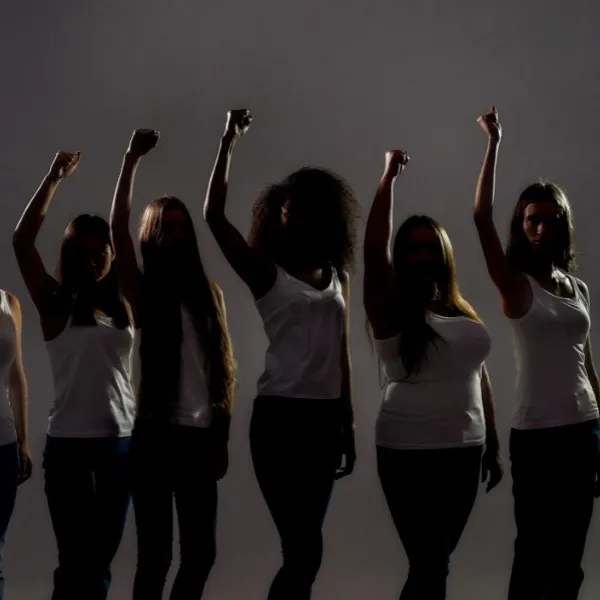
People who face these networks of bars all day long, are caged. They are not equal to everyone else, they are not on the same playing field. That they are seen as lazy is a commentary on the speakers and the freedoms they take for granted as ‘the way things are’ in their reality. While they have frustration, they still have choices and options.
This is why the denial of abortion rights hits traditionally marginalized women the hardest. This is why affirmative action is so needed. Options are being taken away and bars are being rebuilt when there is no room for varied life experiences.
Those of us who are not plagued with oppression bars in our lives have forgotten how important certain laws are to keep our society functioning without revolt and suffering. I don’t want my choices and freedoms to rest on top of someone else’s cage. That is freedom on shaky ground.
One may know of oppression, but unless they have experienced it, they do not understand it. Perhaps at some point in the distant future no one will be allowed to hold power without first going through a virtual reality experience of the bars that are in the lives of all of the people they rule over. ©
References:
Frye, M. (1983). Oppression. In The politics of reality: Essays in feminist theory (pp. 1–16). Crossing Press.
Hume, D. (2007). An enquiry concerning human understanding (P. Millican, Ed.). Oxford University Press. (Original work published 1748.
Kierkegaard, S. (1993). Upbuilding discourses in various spirits (H. V. Hong & E. H. Hong, Trans.). Princeton University Press.
King, M. L., Jr. (n.d.). Three ways of meeting oppression. Lumen Learning. https://courses.lumenlearning.com/suny-jefferson-collegecomposition/chapter/martin-luther-king-jr-three-ways-of-meeting-oppression/
Washington State University. Feminist Theory. Theoretical Models for Teaching and Research. https://opentext.wsu.edu/theoreticalmodelsforteachingandresearch/chapter/feminist-theory/
