
As seen on Victoria’s Graffiti substack
Both the crab spider and the honeybee may feed on nectar and pollen, but the crab spider also produces venom that can subdue a honeybee and turn it into a much larger meal. The honeybee makes honey.
When it comes to nature, though, neither is wrong nor better than the other. Nature has an inherent moral neutrality within it. Nothing is wasted or hoarded beyond what is needed in the moment and rarely do insects or animals act from emotional petty aggressiveness. Squirrels may hoard stuff for the winter but planning ahead is not over consumption. Animals and insects act as they were made and live on instincts without thought of causing deliberate harm.
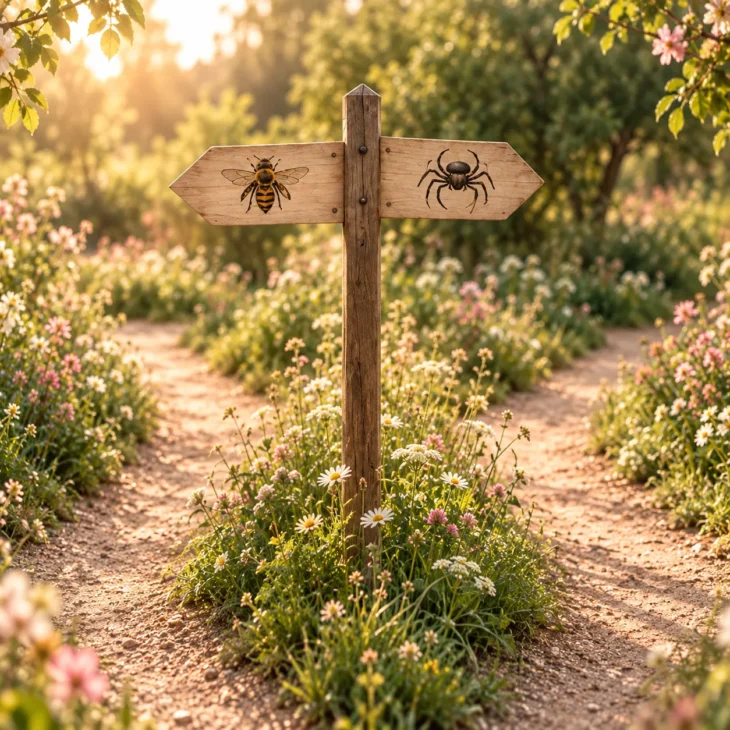
Humans are made differently and face moral dilemmas and choices. We can grow our food, decide how we treat living things as we produce it, and consciously choose how we behave toward one another. We have free will and higher brain centers that can override instinct. We can reflect on our impulses, imagine consequences, and sometimes choose not to act on instinct.
Of course, having choices does not mean we use them well. Humanity has been given reason and free will with imagination, and still somehow we end up arguing with strangers in a parking lot over who saw the empty space first.
Life is not about choosing between being a crab spider or a honeybee, but about choosing to be a honeybee most of the time. Of pausing in the moment and seeing the realm of choices we have to respond to a situation. We can choose again and again what to make with what is given to us. This capacity for reflection allows us to grow morally, evolve, and become different from who we were before the choice that we made sat before us. Most insects and animals do not have such a choice.
We can be either the honeybee and make tasty healthy things; or the crab spider and make venom. Unfortunately in this world as it is, when we choose to be a honeybee we open ourselves up to be eaten by a crab spider as both are around the flowers with nectar. Choosing peace does not guarantee that others will do the same. A creature that only makes honey can still encounter one equipped with venom. Therefore we may have no choice but to learn defense so we can protect our ability to choose peace, to keep making honey.
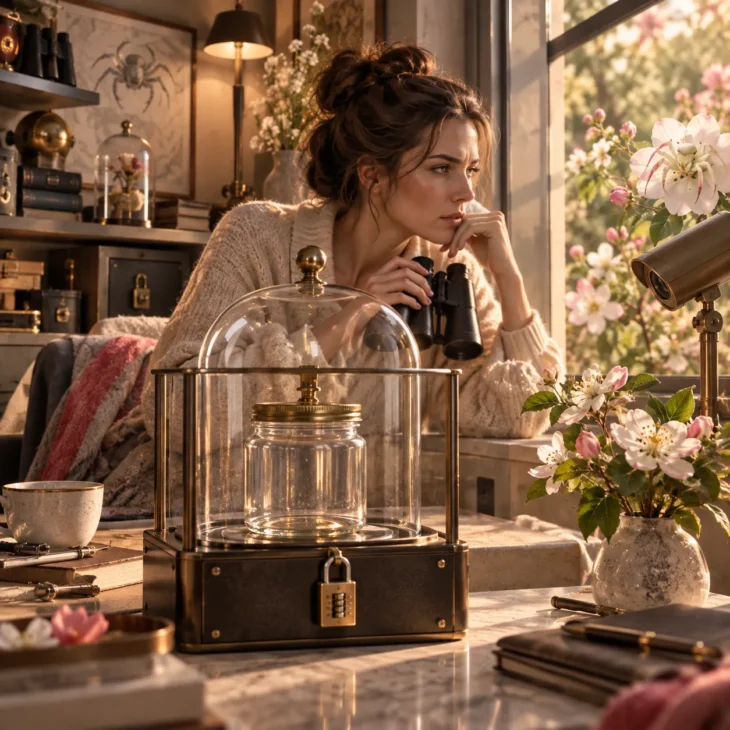
We can also spend so much time preparing for a crab spider in our lives that we eventually find ourselves living in a bunker, glaring at flowers, waiting for the safest moment to make more honey. It is then that we have to ask ourselves whether we are protecting our honey or have just developed a security system around an empty jar.
Nature does not make moral choices. Humans do. Making honey is creation; venom represents our capacity to harm; defenses sometimes becomes necessary but defense should protect the life we want to live rather than become the purpose of that life. The problem is when we choose defense so disproportionately to peace that we stop making honey all together and with it we stop growing. ©
